EV Fleet Expo 2026 took place on World EV Day, providing a timely opportunity to look at where fleet electrification is heading and some of the practical challenges organisations are encountering as they make the transition.
With electric vehicles, charging technology, electric plant and energy management solutions all represented, one of the clearest themes from the day was that the conversation is increasingly shifting beyond the vehicles themselves.
Electric vehicles are becoming more readily available across passenger, commercial and operational fleets, but providing the energy infrastructure to support them at scale remains a significant challenge.
Depot power is becoming a critical part of fleet planning
Introducing a small number of electric vehicles into a fleet can often be accommodated within existing infrastructure, but the challenge becomes more complex as the number of vehicles increases.
When multiple vehicles need to charge at the same time, particularly larger commercial vehicles, the charging load can exceed what an existing depot connection was originally designed to supply. Increasing that capacity can require a network application, transformer upgrades, new switchgear, electrical infrastructure and civil works. Depending on the site and the network, this can involve significant investment and long lead times.
For fleet operators, this creates an important planning consideration because vehicles may be available well before the depot infrastructure required to support them is ready. Understanding a site's existing connection capacity, energy consumption, fleet duty cycles and future charging requirements therefore needs to happen early in the fleet transition process.

Battery-backed charging provides another option
One of the interesting themes at EV Fleet Expo was the growing role of battery storage in supporting EV charging where grid capacity is constrained.
Rather than relying on the grid connection to provide the full charging load at the moment a vehicle plugs in, an on-site battery can charge progressively from the existing electricity supply and from solar where it is available. Stored energy can then be used to provide higher-power DC charging when vehicles need it.
For suitable sites, this approach can help reduce peak demand on the grid, allow charging infrastructure to operate within an existing constrained connection and enable capacity to be expanded progressively as the fleet grows.
In some circumstances, battery-backed charging may also reduce the scale of a required network upgrade or provide an interim solution while longer-term infrastructure works are completed. This is particularly relevant as organisations consider how to begin electrifying fleets without waiting for every element of their permanent charging infrastructure to be in place.
Solar, batteries and charging are becoming part of the same system
Another takeaway from the Expo was the importance of looking at fleet charging as part of the site's broader energy system rather than treating chargers as standalone infrastructure.
A fleet depot may need to manage grid electricity, rooftop solar, battery storage, EV charging and existing building loads within the same available connection capacity.
Bringing these elements together through an energy management system allows operators to manage when vehicles charge, how stored energy is used and how much power the site draws from the network. Solar can contribute lower-cost on-site generation, while batteries can store that energy and help manage periods of higher demand. Together, these technologies can provide fleet operators with greater flexibility in how they use the available energy at a site.
The strong council and municipal works presence at EV Fleet Expo also highlighted another important consideration for fleet operators: resilience.
Councils, utilities, emergency services and other essential fleets need to remain operational during storms, floods, bushfires and other events that can disrupt electricity networks. For these organisations, energy infrastructure needs to be considered not only in terms of everyday charging requirements, but also in terms of how operations can continue when normal infrastructure is disrupted.
Electrification is extending beyond vehicles
The technology on display also demonstrated how quickly electrification is expanding beyond passenger and light commercial vehicles.
Electric excavators and other plant showed how battery-electric technology is moving into equipment used on construction sites, council works and other operational environments. As more types of vehicles and equipment become electric, the challenge of providing energy where and when it is required becomes increasingly important.
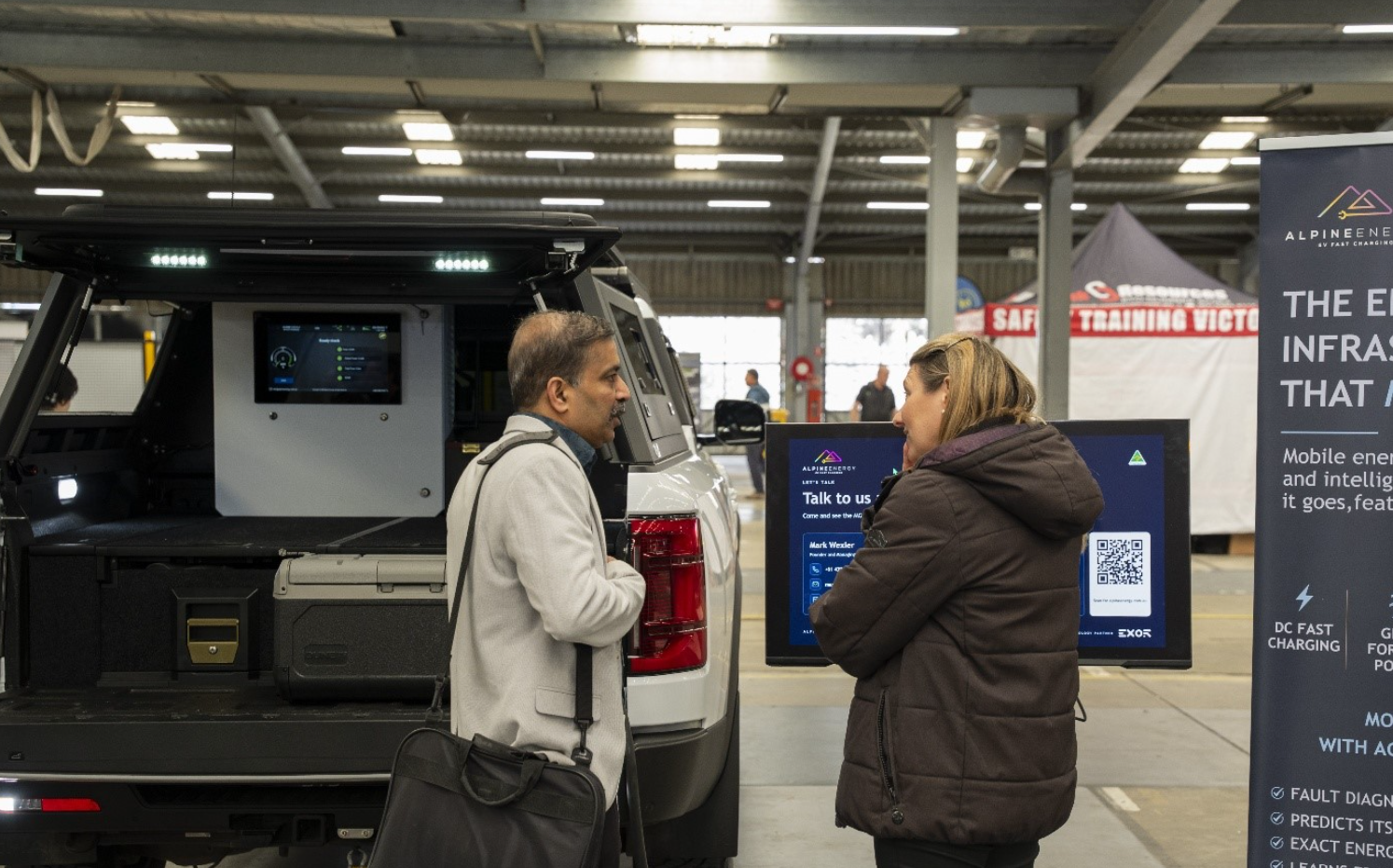
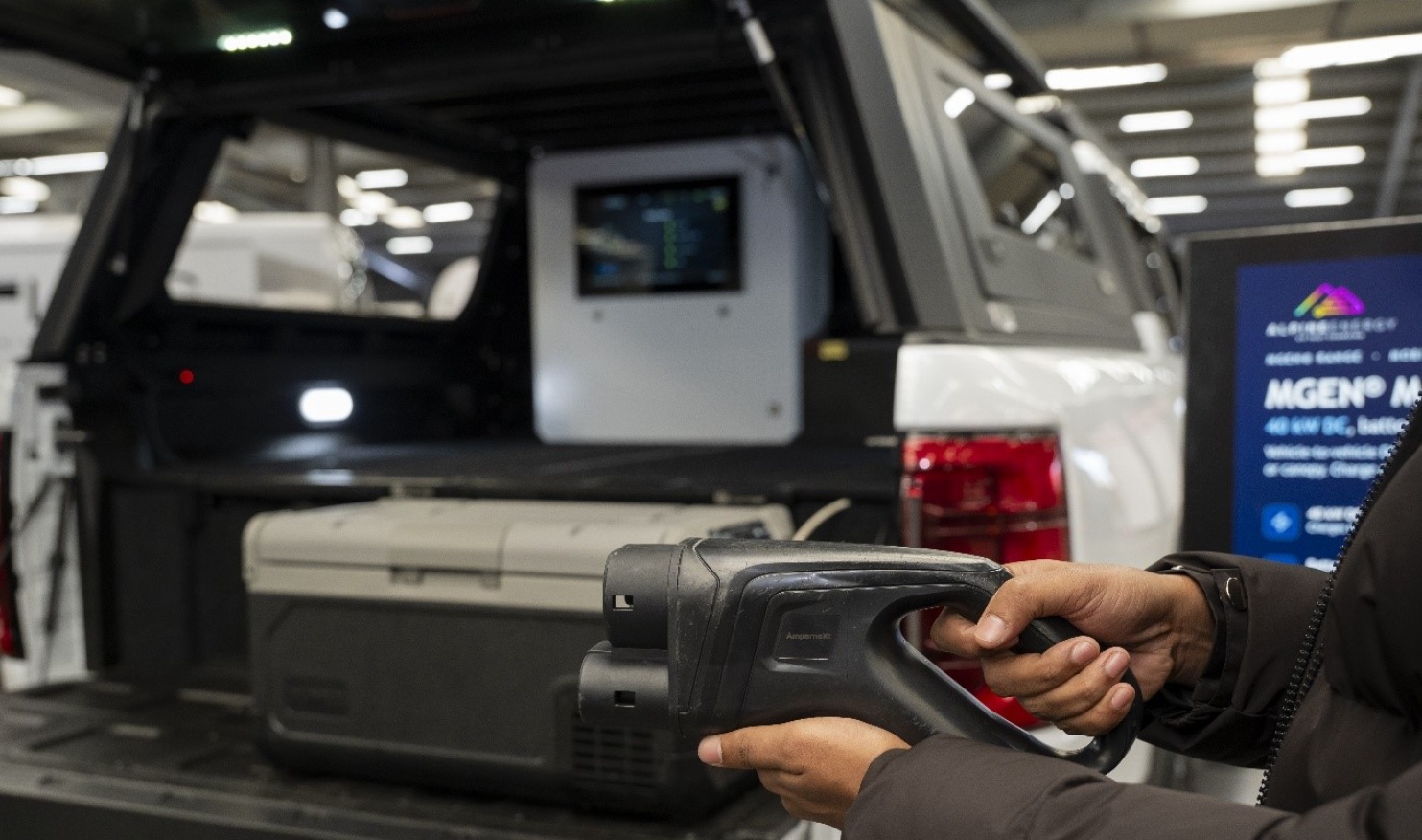
Mobile charging was another interesting part of this conversation.
Rather than assuming every vehicle or piece of equipment will always return to a fixed charger, mobile charging provides another way of thinking about fleet energy. It can bring charging capacity to the vehicle, which could be particularly useful for roadside response, remote worksites, temporary operations or situations where permanent charging infrastructure is still being developed.
It is unlikely to replace permanent depot charging for most fleets, but it could become an important complementary capability as fleet operations become more distributed and increasingly dependent on electricity. Energy management systems and live telemetry were also prominent across the Expo. As fleets become increasingly electric, operators will need visibility over vehicle location, state of charge, charging requirements and energy consumption, as well as how those requirements interact with the available energy at the depot.
What does this mean for fleet operators?
One of the clearest lessons from EV Fleet Expo 2026 was that planning for fleet electrification needs to consider vehicles and energy infrastructure together.
Before determining how many chargers are required, organisations need to understand how much energy their fleet will need, when that energy will be required and whether the existing site infrastructure can reliably provide it. From there, fleet operators can assess the role of grid upgrades, battery storage, rooftop solar, battery-backed charging, mobile charging and energy management in developing an infrastructure strategy that suits their operations.
For some sites, increasing the grid connection will remain the most appropriate long-term solution. For others, batteries and distributed energy may reduce the size of the required upgrade, provide additional flexibility or allow fleet electrification to begin while network works are still underway. Mobile charging may also have a role where operations extend beyond the depot, particularly for fleets working across regional, remote or temporary locations.
There will not be one solution that works for every fleet or every depot. What EV Fleet Expo 2026 reinforced is that the fleet transition is increasingly about more than choosing the right vehicles. It is about making sure the energy infrastructure, charging strategy and operational systems are ready to support them.
For us at Alpine Energy, the Expo was a valuable opportunity to hear directly from fleet operators, councils, technology providers and others working through these challenges, and to see how quickly the technology supporting fleet electrification continues to evolve.